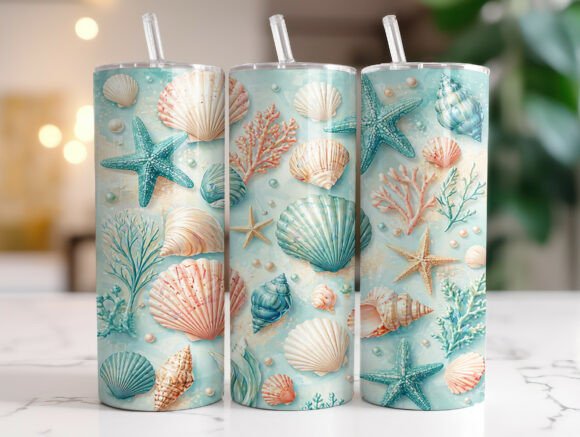
Seashell Pearl Tumbler Wrap Sublimation Review
As a designer who has spent years testing embroidery files for everything from boutique branding to personalized holiday gifts, I know that the difference between a good project and a great one often comes down to the design itself. Recently, I came across Seashell Pearl Tumbler Wrap Sublimation, and while it is marketed as a graphic asset, I wanted to look past the surface description to see how this piece would actually perform in a real-world embroidery scenario. The file claims to be high-resolution with specific dimensions perfect for 20oz skinny tumblers, but does that translate well when we are talking about stitch density, fabric texture, and the final visual appeal of a handmade product?
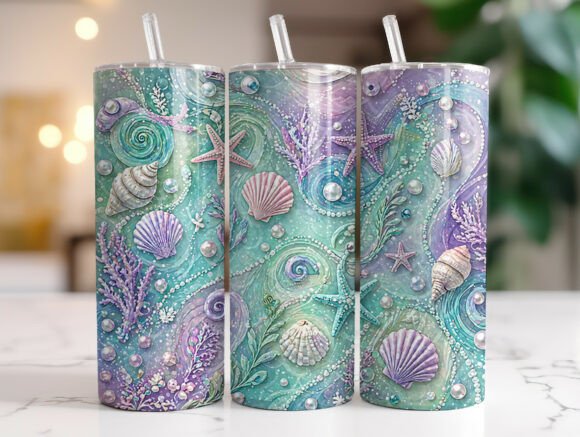
The first impression of Seashell Pearl Tumbler Wrap Sublimation is undeniably serene. It captures a mood of coastal relaxation and elegance that feels perfectly suited for summer-themed collections or bridal shower favors. When I laid out the straight and tapered PNG files on my digital workspace, the layout felt balanced, avoiding the cluttered look that often plagues busy patterns. For a designer eyeing this for a custom apparel line or a small shop product, the visual personality is clear: it belongs in projects that demand a touch of sophistication without being overly ornate.
Real-World Application: From Digital File to Finished Product
To truly evaluate this design, I imagined a specific client scenario: a local boutique owner needing a cohesive set of merchandise for a summer pop-up market. She wanted to create a line of embroidered tote bags and kitchen towels featuring a beach theme. This is where Seashell Pearl Tumbler Wrap Sublimation becomes interesting. While the title suggests it is a tumbler wrap, the underlying graphics are versatile enough to be adapted for other surfaces if treated correctly.
In a practical sense, using this design for a tote bag design requires careful consideration of the canvas weight. The clean lines of the seashells and pearls would likely hold up well on a heavy-duty cotton canvas, providing a crisp contrast against the natural fabric. However, if the goal was to use this on a stretchy sweatshirt or a thin baby onesie, the stability of the design would be the primary concern. The taper mentioned in the file details implies a shape that follows the contour of a cylinder, which translates to a curved application on flat items like pillow covers or aprons. If the design is too wide for the available hoop size, you risk distortion during the stitching process, ruining the delicate pearl details.
I also considered the potential for this design in holiday embroidery. Imagine a winter gift set where the same motif is used on a tea towel or a patch. The neutral tones implied by "pearl" suggest it could work year-round, acting as a subtle accent rather than a loud statement. For an Etsy seller looking to expand their inventory, having a versatile embroidery file that can shift from a summer tumbler wrap to a winter home decor item adds significant value to your design assets.
Navigating Technical Challenges in Embroidery
No review is complete without addressing the technical realities of machine embroidery. Even with a high-resolution 300 DPI source, the translation into stitches is where things can go wrong. Stitch density is the first factor to watch. If the fill stitch areas in Seashell Pearl Tumbler Wrap Sublimation are too dense, the fabric may pucker, especially on lightweight materials like silk or thin polyester blends. Conversely, if the density is too low, the satin stitches might not cover the background fabric completely, leading to a messy appearance.
Another critical area is the handling of detailed corners and tiny lettering. If the design includes fine text alongside the shell graphics, it must be tested on scrap fabric first. Small details often get lost in the needle movement, particularly on textured fabrics like denim or terrycloth. I recommend checking the stabilizer choice carefully; a cut-away stabilizer is usually best for maintaining the integrity of the design on stretchy garments, whereas a tear-away might suffice for stable wovens like those used for embroidered patches.
For those planning to use this on dark fabric, thread color contrast becomes paramount. A pearl motif on black fabric requires a very specific shade of white or silver thread to pop effectively. If the thread choice is off, the design loses its "glow" and looks muddy. Testing in a black and white mockup before committing to a full production run is a smart move to ensure the value of the finished product remains high.
Strategic Use Cases for Designers and Sellers
This design shines brightest when applied to products that benefit from a premium feel. Think wedding gifts or personalized products for baby showers. The soft, organic shapes of the seashells align perfectly with nursery decor themes. However, caution is advised when considering commercial embroidery on frequently washed items like aprons or kitchen towels. If the design relies heavily on intricate running stitches that are prone to snagging, the longevity of the garment could be compromised after several wash cycles.
When creating printable mockups for your online store, it is essential to show how the design sits on the actual product. Customers need to visualize the scale. Since the file specifies a size of 9.3″ x 8.2″, you can confidently market this as a large-format design suitable for statement pieces. But remember, if you plan to sell the finished items, you must confirm the licensing terms. Does the purchase allow for commercial use? Can you sell unlimited quantities? These questions are vital for any craft business owner.
Essential Designer Notes Before You Stitch
Before you load this file into your machine, there are a few non-negotiable steps to ensure success. First, always test the design on a scrap piece of the exact fabric you intend to use. This reveals how the fabric texture interacts with the stitch pattern and helps you adjust tension settings accordingly. Second, verify the hoop size compatibility. If your design exceeds your machine's maximum hoop dimensions, you will need to split the design, which can lead to misalignment issues.
Review the thread colors provided in the digitization. Sometimes the default palette doesn't match the aesthetic you want for your brand. Be prepared to swap out threads to achieve the desired effect. Also, inspect the small details closely; if the digitizer did not account for the shrinkage of the fabric, the final result might be smaller than expected. Finally, double-check whether the design works for both personal and commercial projects. Some files come with restrictions that prevent you from selling the final output, which could jeopardize your small shop product listings.
In conclusion, Seashell Pearl Tumbler Wrap Sublimation offers a beautiful foundation for a variety of creative endeavors. Its elegant theme and clean layout make it a strong candidate for custom apparel, home decor, and gift items. However, like any embroidery project, its success depends on the skill of the operator and the suitability of the materials. By treating it with the respect due to a professional design asset, you can transform a simple digital file into a standout handmade product that customers will love. Whether you are a seasoned Etsy seller or a hobbyist looking to upgrade your craft fair offerings, this design has the potential to elevate your brand consistency and buyer engagement.